
High Pressure Hydro Jetting Machine: Types, Uses & Benefits
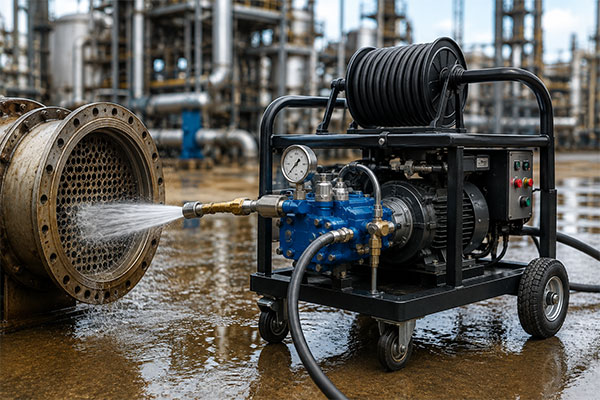
A High Pressure Hydro Jetting Machine is an industrial cleaning system that uses high-pressure water to remove dirt, scale, rust, deposits, sludge, grease, paint, and other unwanted materials from surfaces, pipelines, tubes, tanks, heat exchangers, and industrial equipment.
Unlike conventional mechanical cleaning methods, a Hydro Jetting Machine uses pressurized water to deliver powerful cleaning action without relying on abrasive chemicals or physical scraping. Depending on the application, hydro jetting equipment can be designed for pressures ranging from moderate cleaning levels to ultra-high-pressure applications such as 20000 PSI Hydro Jetting Machines.
These machines are widely used in industries where efficient, controlled, and thorough cleaning is required.
What Is a Hydro Jetting Machine?
A Hydro jetting machine is a high-pressure water cleaning system consisting of a high-pressure pump, drive unit, water supply arrangement, pressure control system, hoses, valves, and specialized nozzles.
The pump pressurizes water and sends it through a specially designed nozzle. The nozzle converts the water pressure into high-velocity jets that can break down and remove contaminants from industrial surfaces.
A typical hydro jetting system may include:
- High-pressure pump
- Electric motor or diesel engine
- Pressure gauge
- Pressure regulating valve
- High-pressure hose
- Spray gun or jetting lance
- Specialized cleaning nozzles
- Water tank or inlet connection
- Safety and control components
The exact configuration depends on the required pressure, flow rate, cleaning application, and operating environment.
How Does a High Pressure Hydro Jetting Machine Work?
The working principle of a High Pressure Hydro Jet Cleaning Machine is based on converting water pressure into high-velocity water jets.
First, water is supplied to the pump from a suitable water source. The high-pressure pump increases the water pressure and delivers it through high-pressure hoses. At the end of the hose, a specially selected nozzle directs the water onto the surface that needs to be cleaned.
The high-speed water jet penetrates deposits and contaminants, loosening them from the surface. The resulting debris and wastewater can then be collected or removed according to the cleaning process.
Basic Hydro Jetting Process
- Water is supplied to the high-pressure pump.
- The pump pressurizes the water.
- Pressurized water travels through the high-pressure hose.
- A suitable nozzle directs the water jet onto the target surface.
- High-velocity water breaks down deposits and contaminants.
- The loosened material is flushed away.
- The cleaned surface is inspected before the equipment is returned to service.
Correct nozzle selection, pressure control, and flow rate are important for achieving effective cleaning without damaging the equipment.
Types of Hydro Jetting Machines
Different cleaning applications require different pressure and flow configurations. Some commonly used systems include the following.
High Pressure Hydro Jetting Machine
A High Pressure Hydro Jetting Machine is designed for demanding industrial cleaning applications where conventional water pressure is insufficient.
These machines can be used for removing stubborn deposits from industrial equipment, pipelines, floors, tanks, machinery, and other surfaces.
20000 PSI Hydro Jetting Machine
A 20000 PSI Hydro Jetting Machine is designed for ultra-high-pressure cleaning applications that require extremely powerful water jets.
Such systems can be used for specialized industrial cleaning, surface preparation, tube and pipe applications, and removal of difficult deposits.
Because of the extremely high operating pressure, these machines require appropriately rated hoses, fittings, nozzles, safety equipment, and trained operators.
750 Bar / 10000 PSI Hydro Jetting Machine for Tube Cleaning
A 750 Bar / 10000 PSI Hydro Jetting Machine for Tube Cleaning can be used for cleaning tubes and passages where deposits restrict flow or reduce equipment performance.
Tube cleaning applications may include heat exchanger tubes, condenser tubes, process tubes, and other industrial passages.
Specialized tube-cleaning nozzles can direct water jets forward, sideways, or backward depending on the tube geometry and deposit type.
Industrial Water Jet Cleaning Machine
An Industrial Water Jet Cleaning Machine is designed for heavy-duty cleaning requirements in manufacturing plants, process industries, workshops, refineries, power plants, and other industrial facilities.
These systems can be configured according to the pressure and flow requirements of the particular application.
Hydro Jet Cleaning Machine Applications
A Hydro Jet Cleaning Machine can be used for many industrial cleaning operations.
Tube Cleaning
High-pressure water jets can remove scale, sludge, deposits, and other contaminants from tubes and internal passages.
Tube cleaning is particularly important in heat exchangers and condensers because accumulated deposits can reduce heat-transfer efficiency.
Pipeline Cleaning
Hydro jetting can help remove deposits and blockages from pipelines and process lines. The appropriate pressure, flow rate, hose, and nozzle depend on the pipeline material, diameter, length, and type of contamination.
Heat Exchanger Cleaning
Heat exchangers can accumulate scale, dirt, sludge, and process deposits over time. High-pressure water jet cleaning can help restore cleaner heat-transfer surfaces.
Tank and Vessel Cleaning
Hydro jetting equipment can be used to clean tanks and vessels by removing accumulated material from internal surfaces.
Industrial Floor Cleaning
High-pressure water can remove grease, oil residues, dirt, and other contaminants from industrial floors and working areas.
Machinery Cleaning
Industrial machinery can accumulate grease, process residue, dust, and other contaminants. Controlled water jetting can help clean suitable machine surfaces efficiently.
Surface Preparation
High-pressure water jetting can also be used for certain surface preparation applications, including removal of coatings, rust, scale, and other surface contaminants.
Industrial Water Jetting Systems
Industrial Water Jetting Systems are generally configured according to the specific cleaning application rather than using one standard machine for every job.
Important system parameters include:
- Maximum operating pressure
- Water flow rate
- Pump capacity
- Drive power
- Hose length
- Nozzle design
- Water quality
- Cleaning surface
- Type and thickness of deposits
- Required cleaning speed
A machine designed for tube cleaning, for example, may require a different nozzle and flow configuration from a machine used for large tank cleaning.
Benefits of High Pressure Water Jet Cleaning Machines
A High Pressure Water Jet Cleaning Machine offers several advantages for industrial maintenance and cleaning.
Efficient Deposit Removal
High-pressure water can remove stubborn deposits, scale, grease, sludge, and other contaminants effectively when the machine is correctly selected and operated.
Reduced Manual Cleaning
Hydro jetting can reduce the amount of manual scraping and mechanical cleaning required for many applications.
Flexible Applications
The same basic hydro jetting principle can be adapted to pipelines, tubes, tanks, heat exchangers, machinery, floors, and other industrial surfaces.
Controlled Cleaning
Pressure, flow rate, nozzle configuration, and operating distance can be selected according to the cleaning requirement.
Suitable for Industrial Maintenance
Regular cleaning can help maintain equipment performance and reduce the accumulation of unwanted deposits.
Water-Based Cleaning
Hydro jetting uses pressurized water as the primary cleaning medium, although specific applications may involve additional treatment or wastewater management requirements.
How to Choose the Right Hydro Jetting Equipment?
Choosing the correct Hydro Jetting Equipment requires more than simply selecting the highest available pressure.
- Determine Required Pressure
The required pressure depends on the type and strength of the deposits being removed. Extremely high pressure is not always necessary and may be unsuitable for some surfaces.
- Consider Water Flow Rate
Pressure and flow rate work together. A machine with high pressure but insufficient flow may not provide the required cleaning performance for certain applications.
- Identify the Cleaning Application
Tube cleaning, pipeline cleaning, tank cleaning, surface preparation, and machinery cleaning can require different equipment configurations.
- Select the Correct Nozzle
Nozzle design plays an important role in cleaning performance. Different nozzles are available for tube cleaning, surface cleaning, rotary cleaning, and other applications.
- Choose the Drive System
Hydro jetting machines may use electric motors or diesel engines depending on the available power supply and operating location.
- Check Component Ratings
Hoses, valves, fittings, gauges, pumps, and nozzles must be suitable for the intended operating pressure and flow.
- Consider Portability
For field maintenance work, a mobile or trailer-mounted system may be preferable. Fixed installations can be suitable for workshops and industrial plants with dedicated cleaning areas.
Hydro Jetting Machine vs Conventional Cleaning
Conventional cleaning may involve manual scraping, wire brushes, mechanical tools, or other cleaning methods. These approaches can be useful for certain applications but may require considerable labor and time.
A Water Jet Cleaning Machine uses pressurized water to deliver cleaning force directly to the contaminated surface.
The best method depends on the application, material, contamination, accessibility, environmental requirements, and desired cleaning result.
Why Pressure and Flow Rate Both Matter
One common misconception is that a machine with the highest PSI will always provide the best cleaning performance.
In reality, pressure and flow rate must be considered together.
Pressure determines the force with which water impacts the surface, while flow rate determines how much water is delivered and how effectively loosened contaminants can be flushed away.
For example, tube cleaning may require a specific balance between pressure, flow, nozzle configuration, and tube diameter. Selecting equipment only on the basis of PSI can therefore result in an unsuitable cleaning system.
Safety Considerations for High Pressure Hydro Jetting
High-pressure water jetting can be hazardous if equipment is incorrectly operated. Operators should follow the manufacturer’s operating instructions and applicable workplace safety requirements.
Important considerations include:
- Use pressure-rated hoses and fittings.
- Inspect hoses and connections before operation.
- Never direct a high-pressure jet toward people.
- Use appropriate protective equipment.
- Maintain safe operating distances.
- Ensure pressure is released before maintenance.
- Use correctly rated nozzles and accessories.
- Provide proper operator training.
- Follow site-specific safety procedures.
Ultra-high-pressure equipment such as 20000 PSI Hydro Jetting Machines requires particularly careful operation and properly rated components.
Why Use an Industrial Water Jetting Cleaner?
An Industrial Water Jetting Cleaner can provide a practical solution for cleaning difficult industrial deposits where ordinary washing methods are not sufficient.
The equipment can be configured for specific applications and used during planned maintenance, shutdowns, equipment servicing, and routine industrial cleaning operations.
By selecting the appropriate pressure, flow, nozzle, and accessories, users can create a cleaning system suited to their particular application.
Frequently Asked Questions
What is a High Pressure Hydro Jetting Machine?
A High Pressure Hydro Jetting Machine is an industrial cleaning machine that uses pressurized water to remove dirt, scale, sludge, grease, rust, deposits, and other contaminants from industrial equipment and surfaces.
What is a 20000 PSI Hydro Jetting Machine used for?
A 20000 PSI Hydro Jetting Machine is used for specialized ultra-high-pressure cleaning applications where very high water pressure is required. It may be used for difficult deposits, specialized surface preparation, and certain industrial cleaning operations.
What is a 750 Bar Hydro Jetting Machine?
A 750 Bar Hydro Jetting Machine operates at up to approximately 10,000 PSI and can be configured for industrial cleaning applications such as tube, pipeline, machinery, and equipment cleaning.
Can a Hydro Jetting Machine be used for tube cleaning?
Yes. Hydro jetting machines can be equipped with specialized tube-cleaning nozzles and accessories for cleaning heat exchanger tubes, condenser tubes, process tubes, and other suitable passages.
What is the difference between a Hydro Jetting Machine and a Water Jet Cleaning Machine?
In many industrial contexts, the terms are used interchangeably. Both generally refer to equipment that uses pressurized water for cleaning. The actual machine configuration depends on pressure, flow rate, pump type, nozzle design, and application.
How do I select a Hydro Jetting Machine?
Consider the required pressure, flow rate, cleaning application, type of deposits, surface or equipment material, nozzle configuration, drive system, portability, and safety requirements before selecting a machine.
Conclusion
A High Pressure Hydro Jetting Machine is a versatile solution for industrial cleaning, maintenance, tube cleaning, pipeline cleaning, heat exchanger cleaning, tank cleaning, and surface preparation.
From a 750 Bar / 10000 PSI Hydro Jetting Machine for Tube Cleaning to a 20000 PSI Hydro Jetting Machine for specialized high-pressure applications, the right equipment depends on the required pressure, flow rate, cleaning surface, contamination, and operating conditions.
Choosing the correct Hydro Jetting Equipment rather than simply selecting the highest-pressure machine can improve cleaning efficiency, equipment safety, and overall operating performance.