
Blocked sewer lines, clogged drainage systems and accumulated waste inside pipelines can create challenges for residential, commercial and industrial facilities. Regular pipeline cleaning helps remove unwanted materials and maintain suitable flow conditions. A High Pressure Sewer Jetting Pump is designed to support these cleaning requirements by delivering pressurized water through a jetting hose and suitable nozzle.
Unlike basic cleaning methods that may only address accessible blockages, water jetting equipment is used to direct water into pipelines to loosen and flush out accumulated debris. Selecting the right sewer cleaning pump depends on the pipeline condition, cleaning requirement, water flow and operating pressure.
What Is a High Pressure Sewer Jetting Pump?
A High Pressure Sewer Jetting Pump is a water-powered cleaning system used for sewer lines, drains and pipelines. It delivers pressurized water through a hose connected to an appropriate jetting nozzle. The water stream helps loosen accumulated waste, deposits and obstructions from the internal surfaces of pipelines.
MD Pressure System manufactures sewer jetting equipment for different pipeline cleaning requirements. Its product information includes a stainless steel pump configuration, a 30-metre hose and operating specifications designed for sewer and drainage applications.
How Does a Sewer Jetting Pump Work?
The working principle of a sewer jetting pump is based on directing pressurized water into the pipeline through a hose and nozzle. The water stream helps dislodge accumulated material and move loosened debris through the drainage system.
A typical cleaning arrangement involves the following steps:
- Inspect the pipeline: Identify the affected section and understand the type of blockage or deposit.
- Prepare the equipment: Check the pump, water supply, hose, connections and suitable jetting nozzle.
- Insert the jetting hose: Position the hose carefully inside the sewer or drainage line.
- Start the cleaning operation: Operate the pump according to the recommended pressure and flow requirements.
- Loosen accumulated deposits: Direct the water jet towards the affected section to help remove unwanted material.
- Flush the pipeline: Allow loosened debris to move through the drainage system as appropriate.
- Check the cleaning result: Inspect the pipeline and repeat the process if further cleaning is required.
The actual procedure should always follow the equipment manufacturer’s operating instructions and the safety requirements of the site.
Where Is a High Pressure Sewer Cleaning Pump Used?
A High Pressure Sewer Cleaning Pump can be considered for several pipeline and drainage cleaning applications. The required configuration depends on the size, condition and accessibility of the pipeline.
1. Sewer Line Cleaning
Sewer lines can accumulate waste, sludge and other deposits during regular use. A suitable sewer jetting arrangement directs pressurized water into the line to help loosen and flush out accumulated materials.
2. Drainage System Cleaning
Drainage lines may experience blockages caused by accumulated dirt, waste and deposits. A Drain Jetting Pump provides a water-based cleaning method for addressing these conditions in suitable drainage systems.
3. Industrial Pipeline Cleaning
Industrial pipelines may require periodic cleaning depending on the materials being transported and the operating environment. A suitable jetting pump and nozzle arrangement can help remove deposits from accessible pipeline sections.
4. Commercial Drain Maintenance
Commercial facilities often depend on properly functioning drainage systems. Suitable water jetting equipment can support maintenance activities where accumulated debris affects the movement of wastewater.
Key Specifications of MD Pressure System Sewer Jetting Pump
Before selecting a Sewer Jetting Pump Manufacturer, buyers should review the machine specifications and confirm whether they match the intended cleaning application.
The product details published by MD Pressure System include the following specifications:
- Brand: MD Pump
- Maximum Pressure: Up to 150 bar
- Capacity: Up to 200 LPM
- Hose Length: 30 metres
- Material: Stainless steel
- Speed: 1000 RPM
- Automation Grade: Semi-automatic
- Minimum Order Quantity: 1 set
These are the published product details. Actual equipment suitability should be confirmed according to the required application, operating conditions and final machine configuration.
Important Components of a Sewer Jetting Setup
A proper jetting arrangement involves more than the pump itself. The hose, nozzle and connecting components must be suitable for the operating conditions.
Jetting Hose
The hose carries pressurized water from the pump towards the cleaning point. Its length and pressure compatibility should be considered according to pipeline accessibility and the intended cleaning operation.
Jetting Nozzle
The nozzle directs the water stream into the pipeline. The appropriate nozzle selection depends on the pipeline dimensions, type of deposits and cleaning requirement.
Pressure Control
Operating pressure should be selected according to the pipeline condition and equipment specifications. Using an unsuitable pressure can create safety risks or damage vulnerable pipeline sections.
Water Supply and Connections
A suitable water supply and properly rated connections are essential for consistent equipment operation. Before starting the machine, inspect hoses, fittings and connections for visible damage or leakage.
How to Choose the Right Drain Jetting Pump
Choosing a suitable Drain Jetting Pump requires understanding the cleaning conditions rather than selecting equipment based only on its maximum pressure rating.
- Pipeline dimensions: Consider the diameter, length and layout of the pipeline.
- Type of blockage: Identify whether the cleaning requirement involves sludge, accumulated waste, deposits or other obstructions.
- Pressure requirement: Select an operating pressure appropriate for the pipeline and cleaning application.
- Water flow: Review the required flow capacity for the intended cleaning operation.
- Hose length: Choose a suitable hose arrangement based on the distance and accessibility of the cleaning area.
- Material and construction: Consider equipment construction and compatibility with the operating environment.
- Operating requirements: Check the machine’s automation grade, maintenance needs and available operating facilities.
Discussing these details with the manufacturer helps buyers identify an appropriate machine configuration for their pipeline cleaning work.
Sewer Jetting Pump vs. General Industrial Water Jetting Equipment
Different water jetting machines are designed for different cleaning requirements. A sewer jetting pump is intended for sewer lines, drainage systems and pipeline cleaning. Other industrial water jetting equipment may be configured for tube cleaning, surface cleaning or specialised industrial applications.
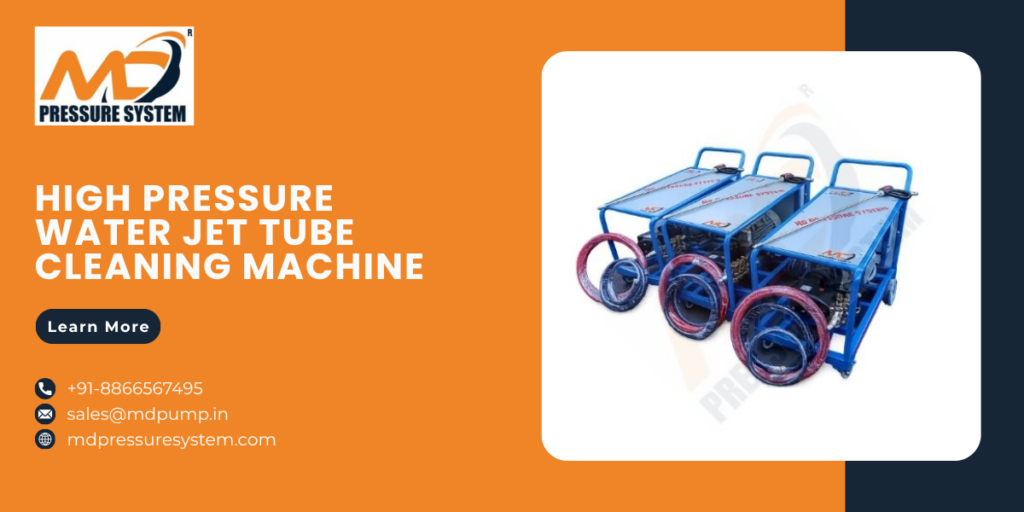
For example, MD Pressure System also offers a High Pressure Water Jet Tube Cleaning Machine for heat exchanger, boiler and condenser tube cleaning applications.
For broader industrial water jetting requirements, buyers can also explore the High Pressure Hydro Jetting Pump. These machines serve different applications, so equipment selection should be based on the actual cleaning requirement.
Safety and Maintenance Considerations
High-pressure water jetting equipment must be operated carefully. Pressurized water can cause serious injuries if the machine is used incorrectly or if a hose or connection fails.
- Read and follow the manufacturer’s operating instructions.
- Inspect the hose, nozzle, fittings and connections before operation.
- Use suitable personal protective equipment.
- Keep people away from the water jet discharge area.
- Never point the nozzle towards people or animals.
- Do not disconnect pressurized hoses or fittings while the system is operating.
- Depressurize the equipment safely before inspection or maintenance.
- Arrange regular inspection and maintenance according to manufacturer recommendations.
Why Consider MD Pressure System for Sewer Jetting Equipment?
MD Pressure System manufactures high-pressure pumping equipment for industrial cleaning requirements. Its High Pressure Sewer Jetting Pump is presented for sewer lines, drains and industrial pipeline cleaning applications.
The published product configuration includes up to 150 bar maximum pressure, up to 200 LPM capacity, a 30-metre hose and stainless steel construction. These details help buyers understand the available equipment configuration before discussing their specific requirements.
Businesses looking for other cleaning solutions can also explore the High Pressure Cleaning Jet Machine product range.
Frequently Asked Questions
What is a High Pressure Sewer Jetting Pump used for?
It is used to clean sewer lines, drains and pipelines by directing pressurized water through a hose and suitable nozzle to loosen and flush out accumulated debris.
What is the maximum pressure of the MD Pressure System Sewer Jetting Pump?
The published product details specify a maximum pressure of up to 150 bar. The suitable operating pressure depends on the cleaning application and site conditions.
What is the capacity of the sewer jetting pump?
The product details list a capacity of up to 200 LPM.
What is the hose length provided with the machine?
The published product details mention a hose length of 30 metres.
Can a sewer jetting pump be used for industrial pipeline cleaning?
Yes, the product is described for different pipeline cleaning requirements, including industrial pipelines. The machine configuration should be checked against the pipeline and cleaning conditions.
Conclusion
A High Pressure Sewer Jetting Pump is a useful water-based cleaning solution for sewer lines, drainage systems and suitable industrial pipelines. Its performance depends on selecting the correct pressure, flow capacity, hose arrangement and jetting nozzle for the application.
MD Pressure System offers a sewer jetting pump configuration with published specifications of up to 150 bar pressure, up to 200 LPM capacity and a 30-metre hose. To discuss your pipeline cleaning requirements and machine suitability, visit the Contact Us page.
 Users Today : 4
 Users This Month : 269
 Total Users : 299