
High Pressure Hydro Test Pump: Types, Applications, Benefits & Selection Guide
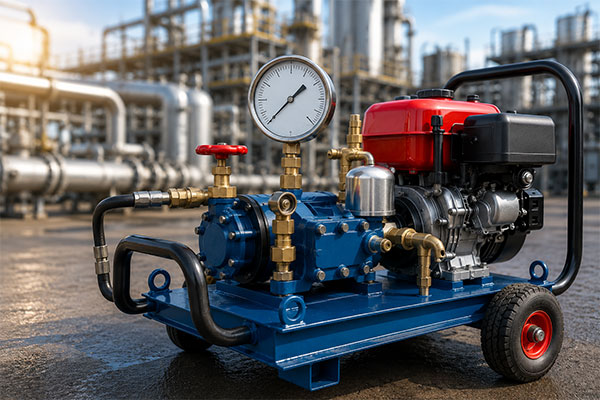
A High Pressure Hydro Test Pump is an essential testing equipment used to check the strength, pressure resistance, and leak-tightness of pipelines, pressure vessels, boilers, tanks, valves, and other industrial systems. By using water as the test medium, a hydrostatic pressure test helps identify leaks, weak joints, and structural problems before equipment is put into regular operation.
Industries that work with high-pressure piping and process equipment rely on accurate and dependable Hydro Test Pumps to maintain safety, quality, and operational reliability.
What is a Hydro Test Pump?
A Hydro Test Pump is designed to deliver water at a controlled pressure for hydrostatic testing. The pump pressurizes the water inside a closed system to a predetermined test pressure. The system is then monitored to determine whether it can safely withstand the required pressure without leakage or excessive pressure loss.
Depending on the application, hydro test pumps are available in different configurations, including electric motor-driven, diesel-driven, and high-pressure plunger pump designs.
How Does a High Pressure Hydro Test Pump Work?
The working principle of a High Pressure Hydrostatic Test Pump is relatively straightforward.
Water is first filled into the equipment or pipeline being tested. The pump then draws water from the supply tank and delivers it into the test system at high pressure. Once the required pressure is reached, the pump can be stopped or operated as required while the system pressure is monitored.
A typical testing process includes:
- Filling the pipeline or equipment with water.
- Removing trapped air from the test system.
- Connecting the hydro test pump to the system.
- Gradually increasing the pressure.
- Maintaining the required test pressure.
- Checking for leaks, pressure drops, or structural defects.
- Releasing pressure safely after testing.
Proper pressure control and gradual pressurization are important for obtaining reliable test results.
Types of Hydro Test Pumps
Different industrial applications require different pump configurations. Some of the commonly used types include:
Diesel Driven Hydro Test Pump
A Diesel Driven Hydro Test Pump is suitable for applications where electrical power is unavailable or where the testing equipment needs to operate independently at outdoor or remote sites.
These pumps can be useful for pipeline testing, construction projects, oil and gas applications, and field-based pressure testing.
Motorised Hydro Test Pump
A Motorised Hydro Test Pump uses an electric motor as its driving source. These pumps are commonly preferred for workshops and industrial facilities where a reliable electrical supply is available.
They can provide convenient operation with consistent pressure output and are suitable for repeated testing applications.
Triplex Plunger Hydro Test Pump
A Triplex Plunger Hydro Test Pump uses three plungers to deliver high-pressure water. The triplex configuration can provide a smooth and reliable flow while supporting high-pressure testing requirements.
These pumps are commonly considered for demanding industrial applications where pressure performance and durability are important.
High Pressure Hydro Test Pump Unit
A High Pressure Hydro Test Pump Unit generally refers to a complete testing arrangement that may include the pump, drive system, pressure gauge, valves, piping connections, and other accessories.
A complete unit can simplify installation and operation, particularly for industrial testing applications requiring a ready-to-use setup.
Applications of Hydrostatic Pressure Testing Pumps
A Hydrostatic Pressure Testing Pump can be used across a wide range of industries and applications.
Pipeline Testing
Pipelines can be pressure tested to identify leaks and verify their ability to withstand specified operating or test pressures.
Pressure Vessel Testing
Pressure vessels require reliable pressure testing to verify structural integrity before commissioning or after maintenance and repair work.
Boiler Testing
Boilers and associated piping systems can require hydrostatic testing to identify leaks and verify pressure resistance.
Valve Testing
Industrial valves can be tested for pressure resistance and leakage performance using controlled hydrostatic pressure.
Tank Testing
Storage tanks and process tanks can be tested to identify leakage and verify the integrity of their construction.
Fire Fighting Pipeline Testing
Fire protection pipelines can also require pressure testing to verify system integrity before being placed into service.
Benefits of Using a High Pressure Hydro Test Pump
Using a suitable high-pressure testing pump provides several advantages for industrial pressure testing.
Leak Detection:
Hydrostatic testing can help identify leakage from joints, welds, fittings, valves, and other connection points.
Controlled Pressure Testing:
A suitable pump allows pressure to be increased in a controlled manner according to the testing requirement.
Equipment Safety:
Testing before commissioning can help identify potential weaknesses before the equipment enters regular operation.
Versatile Applications:
Hydro test pumps can be used for pipelines, tanks, boilers, pressure vessels, valves, and various industrial systems.
Reliable Testing:
High-pressure pump systems designed for testing applications can provide consistent pressure performance when properly selected and operated.
How to Choose the Right Hydro Test Pump?
Selecting the right High Pressure Hydro Test Pump depends on the equipment being tested and the required testing conditions.
Maximum Test Pressure
The pump should be capable of achieving the required test pressure without operating continuously at its absolute maximum capacity.
Flow Rate
The required flow rate depends on the volume of the system being filled and how quickly the desired testing pressure needs to be achieved.
Drive Type
Choose between an electric motor-driven and diesel-driven configuration based on power availability and operating conditions.
Pump Construction
Materials and construction should be selected according to the water quality, operating environment, pressure requirements, and expected frequency of use.
Application Requirements
Pipeline testing, pressure vessel testing, valve testing, and boiler testing can have different pressure and flow requirements. The pump should therefore be selected according to the specific application.
Portability
For field applications, a compact or mobile Diesel Driven Hydro Test Pump can be more practical, while fixed industrial installations may benefit from a motorised pump unit.
Hydro Test Pump vs. Hydrostatic Pressure Testing Pump
The terms Hydro Test Pump and Hydrostatic Pressure Testing Pump are often used interchangeably. Both refer to pumps used to pressurize water during hydrostatic testing.
The difference is primarily terminology rather than a completely different type of equipment. The exact pump configuration depends on factors such as pressure rating, flow requirement, drive system, application, and testing standards.
Why Proper Hydrostatic Testing Matters
Hydrostatic testing is an important part of quality control and preventive maintenance for pressure-containing systems. Detecting leakage or weakness during testing can reduce the risk of unexpected failures after commissioning.
A properly selected High Pressure Hydro Test Pump helps testing teams achieve the required pressure in a controlled and repeatable manner.
Frequently Asked Questions
What is a High Pressure Hydro Test Pump used for?
A High Pressure Hydro Test Pump is used to pressurize water during hydrostatic testing of pipelines, pressure vessels, boilers, tanks, valves, and other pressure-containing equipment.
What is a Diesel Driven Hydro Test Pump?
A Diesel Driven Hydro Test Pump is powered by a diesel engine and is suitable for field or remote applications where electrical power may not be readily available.
What is a Motorised Hydro Test Pump?
A Motorised Hydro Test Pump uses an electric motor to drive the pump and is commonly used in industrial facilities and workshops with an available electrical power supply.
What is a Triplex Plunger Hydro Test Pump?
A Triplex Plunger Hydro Test Pump uses three plungers to generate high-pressure water flow and is designed for demanding pressure testing applications.
How do I select a Hydro Test Pump?
The selection should be based on required test pressure, flow rate, system volume, drive type, portability, construction materials, and the specific equipment being tested.
Conclusion
A reliable High Pressure Hydro Test Pump plays an important role in verifying the integrity and pressure resistance of industrial systems. From Diesel Driven Hydro Test Pumps for field applications to Motorised Hydro Test Pumps and Triplex Plunger Hydro Test Pumps for industrial testing, different configurations are available for different operating requirements.
Choosing the right pump based on pressure, flow, application, and operating conditions can make hydrostatic testing more controlled, efficient, and reliable.